One of the delightful things about being the International Director of the Teach North Korean Refugees Global Education Center is meeting with North Korean refugees when they come in for their initial consultations with us. We want to learn what it is they want to study, make sure they understand that we have a specific process that we expect them to follow, make it clear that this is not a social club to come find foreign friends, and that this is a self-study program so they should not expect tutors to do everything/we have expectations for them.
After we go through the initial interview, the most common question refugees ask: "When can I start?" Some seem to be looking around our office, wondering if there are any teachers available at that moment to start studying.
We have had refugees show up unannounced, even though we don't publicize our address. Others have called us as soon as they learned about us, asking if they could come visit right then. When we tell them they must apply first, then they will call right after that asking if they can come then. Why? Because "I don't want you to forget me. I need to study in TNKR."
Then they come in to visit. In some cases, it seems they are doing cartwheels all the way to our office.


Bonghee Han was getting prepared for choosing tutors she would study with. She analyzed the resumes to make sure she would get the teachers she wanted!
***
As I was writing this post, I asked TNKR co-founder Eunkoo Lee: "Do you think refugees are passive?"
She just looked at me, didn't respond. When we first started working together, she thought refugees were passive, that they couldn't make decisions on their own. That's because in her work as a researcher with government agencies, the refugees she encountered were passive. As she said then: Everyone who worked with refugees knew they were passive. The agencies with a lot of money could afford lousy programs because they could pay refugees to be there or get them to show up by requiring their attendance to get other services.
That disagreement was the theme of our TEDx Talk.
https://www.ted.com/talks/casey_lartigue_jr_eunkoo_lee_you_can_t_save_the_world_here_s_what_we_can_do
And the column I wrote shortly before Eunkoo quit her full-time job to volunteer with TNKR. Some of the stupid expat talkers took it as an attack on Eunkoo, even a radio talk show asked me about it on a radio show, but I showed Eunkoo the column in advance, she was proud that she had developed based on a new situation. The day after I published the column, she made the decision to quit her job to focus on TNKR full-time.
http://www.koreatimes.co.kr/www/news/nation/2017/01/626_222156.html
***
Support fundraisers by students in TNKR
After we go through the initial interview, the most common question refugees ask: "When can I start?" Some seem to be looking around our office, wondering if there are any teachers available at that moment to start studying.
We have had refugees show up unannounced, even though we don't publicize our address. Others have called us as soon as they learned about us, asking if they could come visit right then. When we tell them they must apply first, then they will call right after that asking if they can come then. Why? Because "I don't want you to forget me. I need to study in TNKR."
Then they come in to visit. In some cases, it seems they are doing cartwheels all the way to our office.

He will be joining our next matching session. He's a busy guy with international connections, so he is extremely motivated to improve his english.


She's been on TV many times and insisted that it was okay to show her face.
 |
She's a writer, so she was quite interested in my book. She wanted to buy a copy, but instead I gave her one for free.  |

She can't wait to get started. She may choose all of the tutors.
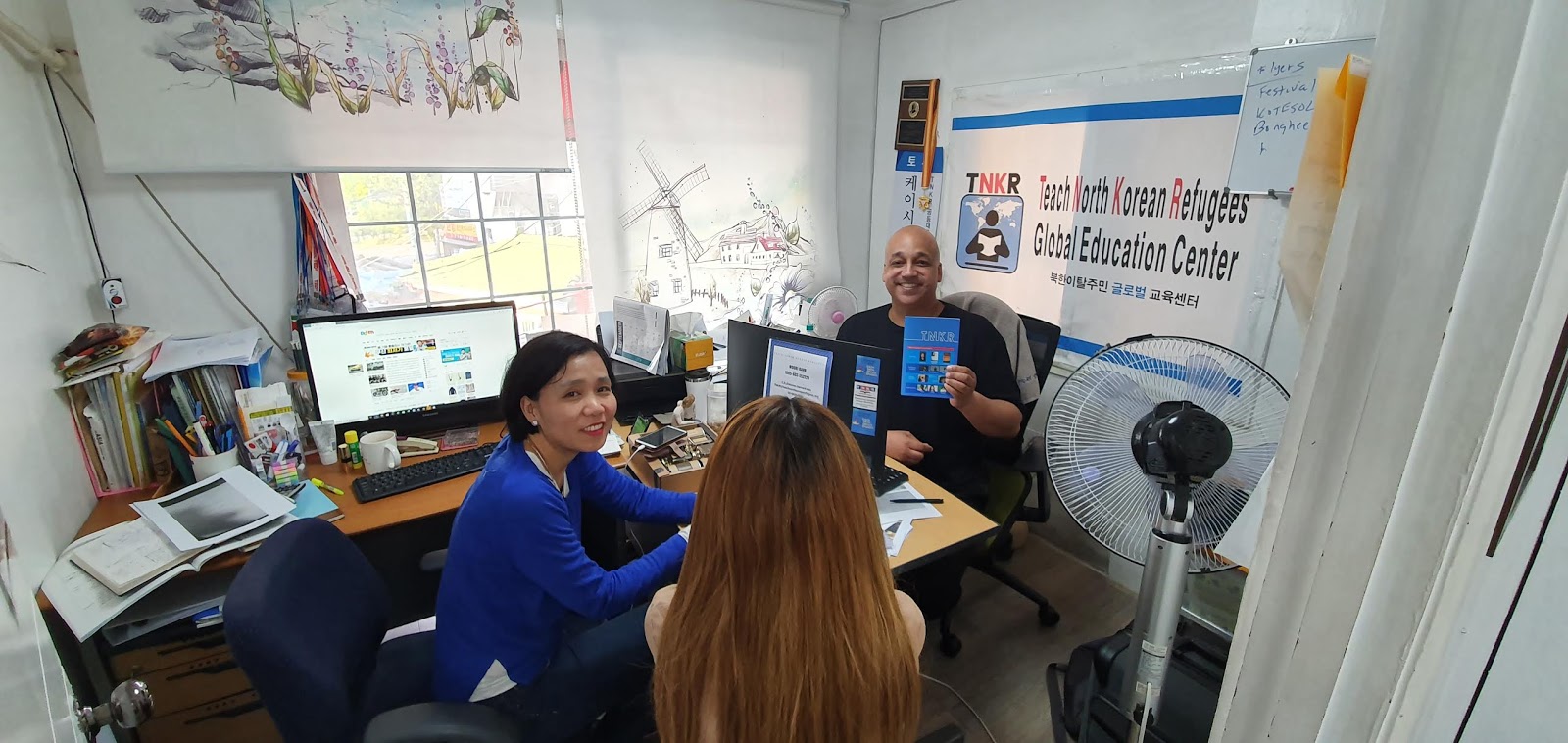

It is great when a student says she has been waiting for the interview because she wanted to meet you. She saw some of my speeches and interviews in YouTube.

Bonghee Han was getting prepared for choosing tutors she would study with. She analyzed the resumes to make sure she would get the teachers she wanted!
***
As I was writing this post, I asked TNKR co-founder Eunkoo Lee: "Do you think refugees are passive?"
She just looked at me, didn't respond. When we first started working together, she thought refugees were passive, that they couldn't make decisions on their own. That's because in her work as a researcher with government agencies, the refugees she encountered were passive. As she said then: Everyone who worked with refugees knew they were passive. The agencies with a lot of money could afford lousy programs because they could pay refugees to be there or get them to show up by requiring their attendance to get other services.
That disagreement was the theme of our TEDx Talk.
https://www.ted.com/talks/casey_lartigue_jr_eunkoo_lee_you_can_t_save_the_world_here_s_what_we_can_do
And the column I wrote shortly before Eunkoo quit her full-time job to volunteer with TNKR. Some of the stupid expat talkers took it as an attack on Eunkoo, even a radio talk show asked me about it on a radio show, but I showed Eunkoo the column in advance, she was proud that she had developed based on a new situation. The day after I published the column, she made the decision to quit her job to focus on TNKR full-time.
http://www.koreatimes.co.kr/www/news/nation/2017/01/626_222156.html
***
Support fundraisers by students in TNKR